
12 Expert Tips for Decluttering and Cleaning Your Home
Decluttering and cleaning work best as one project. When there is less stuff on the counters, floors and shelves, cleaning goes faster and the house stays tidy longer. If you have been putting off a big clear-out, the 12 tips below for decluttering and cleaning your home will help you start, keep going and stay organized afterwards. They come from what works in real homes, from small Toronto condos to family houses with full basements.
Tip 1: Start With a Plan
Walk through your home with a notepad before you touch anything. Write down each room and the two or three things that bother you most in it: the pile on the dining table, the hall closet that will not close, the cabinet under the sink. Then set a realistic goal for each session, such as "clear the kitchen counters and one drawer".
How it helps: a written plan keeps you focused. It stops you from wandering from room to room and finishing nothing.
Tip 2: Clear First, Clean Second
The urge is to grab a cloth and start wiping. Hold off. Take everything off a surface first, decide where each item belongs, and only then clean. A counter with ten objects on it takes three times as long to wipe as an empty one, and you never really reach the corners.
How it helps: fewer items means less to dust, wipe and move around every time you clean in the future.
Tip 3: Use the Four-Box Method
Set up four boxes or bags before you start a room: keep, donate, throw away and relocate. Every item you pick up goes into one of the four. "Relocate" is for things that belong in another room. Do not carry them away one by one. Empty that box at the end of the session.
How it helps: every item gets a clear destination, so you make quick decisions and avoid the "I'll deal with it later" pile.
Tip 4: Work One Room at a Time
Trying to clear the whole house in one weekend usually ends with every room half done. Pick one room, or even one corner of a room, and finish it completely before moving on. Start with a space you use every day, like the kitchen or entryway, so you feel the difference right away.
How it helps: you see real progress, and a finished room keeps you motivated for the next one.
Tip 5: Organize as You Go
Once you know what you are keeping, store it properly while you are still in that room. Use bins, baskets and drawer dividers to group similar items. Label shelves in pantries and closets so everyone in the house knows where things go back. Measure the space before you buy containers, because the wrong size is clutter too.
How it helps: things with a set place get put back, and the room stays tidy far longer.
Tip 6: Build a Cleaning Schedule
After the big clear-out, a routine is what keeps the home in shape. Split jobs into three groups.
- Daily: dishes, a quick counter wipe, ten minutes of putting things away.
- Weekly: vacuum and mop floors, clean bathrooms, dust, change bedding.
- Monthly: wipe baseboards and cabinet fronts, clean the fridge, wash range hood filters.
How it helps: small, regular jobs stop the mess from building up, so deep cleans are shorter and less stressful.
Tip 7: Make the Most of Storage Space
Most homes have more storage than people use. Look up: shelves above doors, hooks on the back of closet doors, and wall-mounted racks in the laundry room. Look down: under-bed bins and drawer units. In condos, stackable bins in closets and a narrow rolling cart beside the fridge add space without taking up floor area.
How it helps: items stored out of sight mean less visible clutter and fewer surfaces covered in things.
Tip 8: Donate or Sell What You Do Not Use
A simple rule: if you have not used something in the past year, and it is not seasonal or sentimental, it can probably go. Donate clothing, kitchenware and toys in good condition to local charities and thrift stores. Sell larger items like furniture or electronics online. Book a pickup or drop-off date right away so the donation bags do not sit in the hallway for a month.
How it helps: the clutter leaves the house for good, and your things get a second life with someone who needs them.
Tip 9: Keep a Small Kit of Multi-Purpose Tools
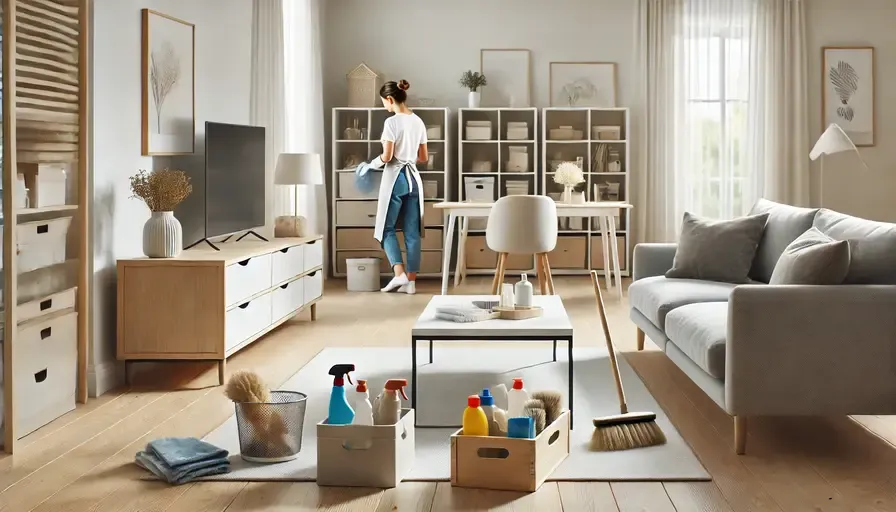
A cupboard packed with a different spray for every surface is clutter too. A short kit covers most homes: a stack of microfiber cloths, an all-purpose cleaner, a glass cleaner, a scrub brush, and a vacuum with floor, upholstery and crevice attachments. Microfiber picks up dust and grime on almost any surface with just water or a light spray.
How it helps: fewer products save space and money, and cleaning goes faster when you are not hunting for the right bottle.
Tip 10: Clean From Top to Bottom
Dust and crumbs fall. Start with the highest surfaces, like ceiling fans, light fixtures and tops of shelves and cabinets. Then do counters, tables and furniture. Do floors last. In the same way, work from the back of the room toward the door so you do not walk over clean floors.
How it helps: you only clean each area once instead of re-cleaning what dust from above has landed on.
Tip 11: Declutter Regularly
Clutter comes back. Mail, kids' artwork, takeout menus and clothes that no longer fit pile up again within a few months. Put a short declutter session on the calendar every season. A good time is when you switch winter and summer clothing, since you are already handling everything in the closet.
How it helps: regular small sessions stop the build-up, so you never face a full house clear-out again.
Tip 12: Reward Yourself
Decluttering is physical work and mentally tiring, because every item asks for a decision. When you finish a room, mark it. Order dinner from your favourite place, take an evening off, or just sit in the clean room with a coffee.
How it helps: a reward gives you something to look forward to and makes the next session easier to start.
Decluttering and Cleaning Your Home for the Long Run
Start small, finish one room at a time, and reward yourself along the way. Before long, the whole home will be easier to live in and much quicker to clean.
How often should I declutter my house?
Do a short session every few months, little by little, so clutter never builds up into a big project.
What is the best way to start decluttering if I feel overwhelmed?
Start with one room or even one small area, such as a single drawer or the coat closet. Breaking the task into small steps makes it much easier to begin.
How do I keep my home clean and clutter-free after a deep clean?
Write out a cleaning and decluttering schedule and post it where everyone can see it. Daily ten-minute resets make the biggest difference.
What storage works best in small spaces?
Use vertical storage such as shelves and hooks. Under-bed bins and stackable containers make the most of a small closet or condo bedroom.
Can a cleaning company help with decluttering?
Some cleaning services can help you get started, mostly by working around sorted items and cleaning the cleared spaces. After that, regular cleaning makes it much easier to keep the space that way. PureMaids works with homes across Toronto and the GTA if you want that part taken off your list.
The most important step is the first one. Pick a single drawer tonight, empty it, and put back only what you use. That small win is usually enough to get the rest of the house moving.