
How to Get Rid of Limescale and Soap Scum (Without Ruining Your Bathroom)
If you live in Toronto or anywhere in the GTA, you already know the drill. That white, chalky buildup on your faucets? Limescale. The cloudy film coating your glass shower door? Soap scum. They're different problems, and treating them the same way is one of the most common mistakes homeowners make.
Limescale is mineral deposits left behind by hard water. Toronto's water sits around 124 mg/L of hardness, which isn't extreme, but it's enough. Every time water evaporates off a surface, it leaves calcium and magnesium behind. Soap scum is something else entirely. It's what happens when soap mixes with those same minerals and sticks to tile, glass, and chrome. Think of it as a greasy, filmy layer that traps dirt and gets worse over time.
Safe Ways to Clean Each One
Not everything in your bathroom can handle the same product. That's worth knowing before you grab whatever's under the sink.
For limescale, white vinegar works surprisingly well. Soak a cloth, wrap it around the faucet, leave it for 20 to 30 minutes. The acid breaks down the mineral deposits without scratching chrome or stainless steel. For tougher spots on showerheads, fill a bag with vinegar, tie it over the head overnight. You'll notice a difference by morning.
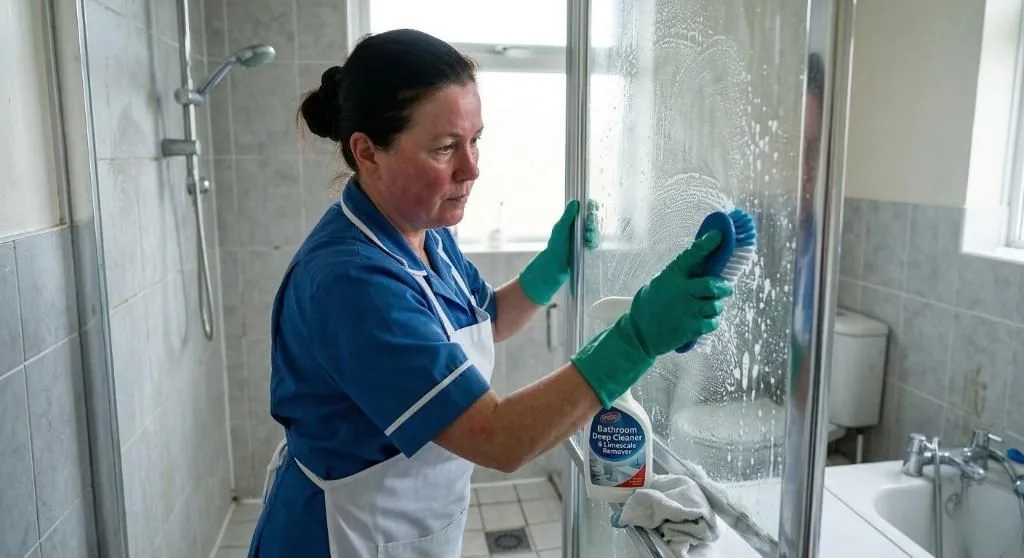
Soap scum needs something different. A paste of baking soda and dish soap, applied with a non-scratch sponge, handles most buildup on tile and glass. For really stubborn layers, a bathroom cleaning tips trick that actually works: spray the surface with vinegar first, then apply the baking soda paste. The fizzing action lifts grime you'd otherwise be scrubbing at for twenty minutes.
One thing to avoid. Never use vinegar on natural stone like marble or granite. It etches the surface. Stick to pH-neutral cleaners for those.
A Realistic 30 to 60 Minute Cleaning Plan
You don't need a whole afternoon. Here's a bathroom deep cleaning approach that fits into a lunch break:
- Spray all surfaces with your chosen cleaner and let it sit while you do something else. Ten minutes of dwell time saves you real effort.
- Start with the shower walls and glass, top to bottom. Scrub the soap scum zones with your baking soda paste.
- Hit the faucets and fixtures with vinegar-soaked cloths. Wrap and wait if buildup is heavy.
- Scrub the tub or shower floor last, since all the runoff ends up there anyway.
- Rinse everything, then dry surfaces with a microfibre cloth to prevent new water spots.
Honestly, the drying step is what most people skip. And it's the one thing that keeps limescale from coming right back.
What We See in Toronto Bathrooms Every Week
A few patterns come up again and again on our routes across the GTA:
- Downtown condo glass showers. Frameless glass doors look stunning and show every drop of hard water. In one condo we clean regularly, the door had gone fully frosted with scum before the first visit; after a proper strip-down, a 30-second squeegee habit has kept it clear for months.
- Older Etobicoke and Scarborough homes. Original chrome fixtures from the 80s and 90s often carry decades of layered limescale. These need patience — long vinegar wraps, repeated — because aggressive scraping ruins the finish for good.
- Rental turnovers. When tenants move out, the bathroom is usually where the damage deposit conversation starts. A dedicated deep clean brings most tubs and tiles back without resurfacing.
Keeping It From Coming Back
- Keep a squeegee in the shower and give the glass 30 seconds after each use — this is the single highest-impact habit.
- Once a week, spray glass and fixtures with a 1:1 vinegar-water mix, wait five minutes, rinse, and dry.
- Switch to liquid body wash or syndet bars; traditional soap is the main ingredient in soap scum.
- Wipe faucets dry after the last use of the evening — limescale can't form on a dry surface.
- If buildup returns fast everywhere, consider a water softener — many GTA households find it pays for itself in fixtures alone.
When It Makes Sense to Call In Help
Some buildup goes beyond weekend cleaning. If you're seeing thick limescale crusted around drain fixtures, discolouration in grout lines that won't lift, or soap scum so layered it feels textured, that's when professional cleaning services make a real difference. The team at Pure Maids handles bathroom deep cleaning across Toronto and the GTA regularly, and there's a reason clients call back: the right tools and products, applied properly, get results that a toothbrush and vinegar simply can't match.
You don't have to wait until things get bad, either. A professional deep clean once or twice a year — with a regular cleaning plan in between — keeps surfaces in good shape with almost no effort on your side. Book a visit and cross the bathroom off your list.