
Post-Renovation Dust: Learn the Best Way to Remove Fine Dust Safely
Your newly renovated space looks fantastic! You've got shiny new floors, fresh new walls, and modern fixtures. But, there's a problem: everything is covered in a thick layer of dust. Renovation dust is different from regular dust. It's finer, travels further, and can be really dangerous if not cleaned the right way.
Cleaning a post-renovation space is a bit different from the usual cleaning routine. At PureMaids, we've cleaned countless post-renovation sites across Toronto and the GTA — from single-bathroom refreshes in North York to full condo gut jobs downtown. We've got the expertise to make the process easy for you. Our motto is: More moments, less mess.
What's So Special About Renovation Dust?
Regular dust is made of fabric, human skin, and other particles. Renovation dust, on the other hand, is made of silica, drywall, wood, metals, and chemicals. All these particles are microscopic and can float in the air.
The silica in the dust, which comes from cutting concrete or tiles, is particularly dangerous. Breathing silica dust regularly can result in serious lung problems. And then there's the dust from the drywall, which can trigger allergic reactions and asthma.
This dust is everywhere, even in closed cupboards, inside appliances, and in the carpets. You can't simply sweep or vacuum the dust and call it a day.
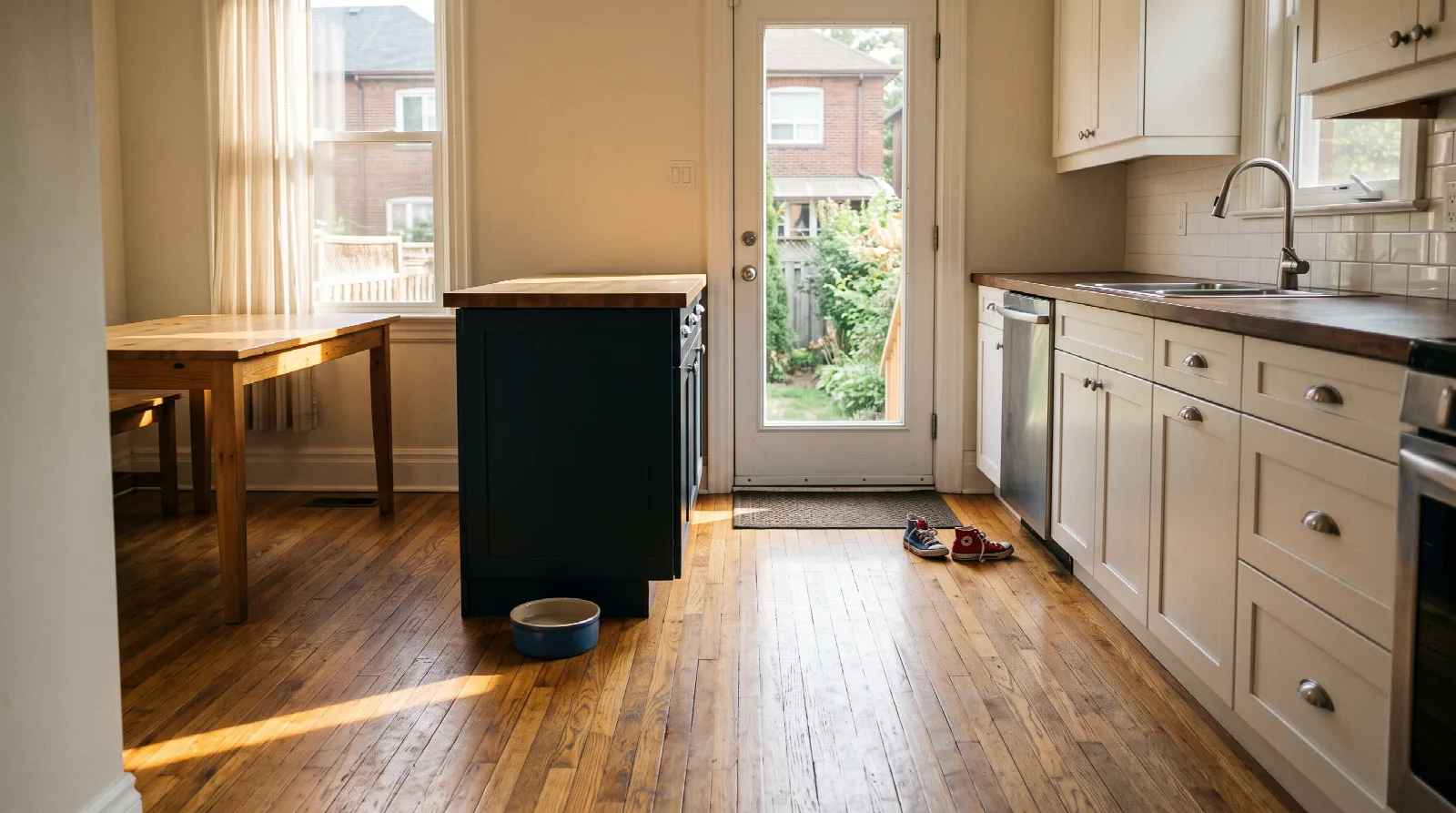
A typical example from our work: after a kitchen renovation in a North York home, the owners had wiped everything down twice and still found white film on the countertops each morning. That's drywall dust cycling through the air and resettling — and it keeps happening until it's removed systematically, not just wiped around.
Preparation Is Key to Safe Renovation Dust Removal
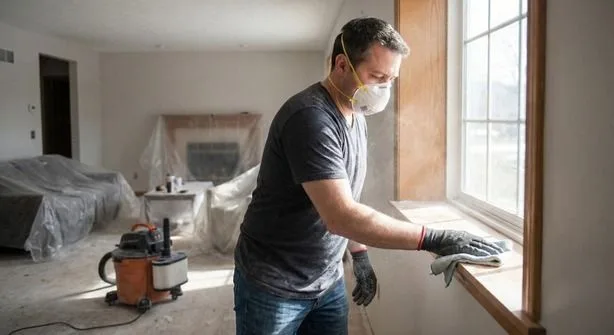
To start the process, you need to wear the right safety gear:
- N95 or P100 respirator mask
- Safety goggles
- Disposable coveralls or old clothing
- Gloves
Open the windows and turn off the HVAC system. Renovation dust can spread to every corner of the house if the system is on.
The Right Cleaning Sequence
Amateurs begin at ground level. Wrong. Dust from construction settles from top to bottom.
Start at the ceiling and go down:
- Ceiling fans, fixtures, and molding — damp microfiber cloths
- Walls — top to bottom with damp sponges
- Windows, frames, and sills — wipe clean
- Furniture and other horizontal surfaces — clean
- Floors — last, vacuum and mop
Two rules that make the difference: use damp cloths as much as possible (dry dusting just circulates dust), and change cloths frequently (dirty cloths spread dust instead of collecting it).
HEPA Vacuums Are Non-Negotiable
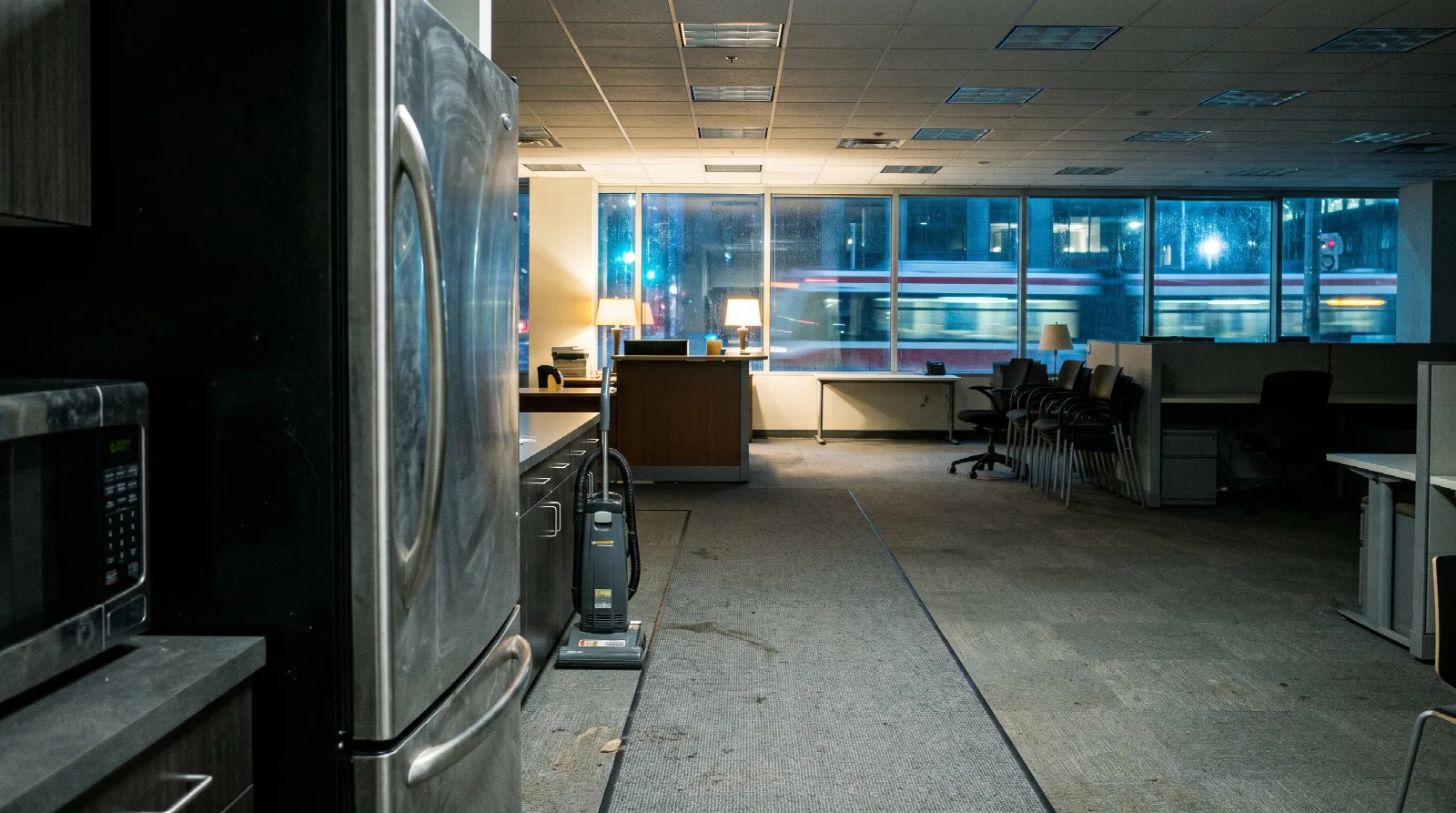
Regular vacuum cleaners spread fine dust straight back into the air. HEPA vacuum cleaners capture 99.97% of particles — this is the one piece of equipment where there's no acceptable substitute.
For Hard Floors:
- Vacuum first, then mop twice with a damp mop.
- The first pass picks up dust; the second pass actually cleans.
For Carpets:
- Steam cleaning is strongly suggested — fine dust penetrates deep into carpet pile where vacuuming alone can't reach it.
HVAC and Air Quality
Your ventilation system is not immune. Construction dust enters your ducts regardless of how careful your contractors were.
Change all air filters before restarting your HVAC system. Use at least MERV 11-rated filters, not cheap fiberglass. Inspect the new filter weekly for the first month — if it loads up fast, dust is still circulating.
If your renovation was extensive, consider professional duct cleaning. Dust in your ducts will contaminate your air for months.
Use HEPA air purifiers in your renovated space for at least two weeks.
When Professionals Make Sense
Some cleanups require professional cleaning services. If your renovation involved:
- Lots of drywall installation
- Lots of tile cutting
- Several rooms
- Hazardous materials
Then professional cleaning becomes the safe choice rather than a luxury. That downtown Toronto condo we mentioned? A full gut renovation left every closet shelf and every kitchen cabinet interior coated in fine dust — our crew with HEPA equipment cleared in one day what the owners had been fighting for two weekends.
PureMaids has a dedicated post-renovation cleaning service for exactly this: industrial HEPA equipment and trained crews that know construction dust, available across Toronto, North York, Etobicoke, Mississauga, and the rest of the GTA.
Our cleanup is quick — usually hours, not days. Your time is worth money, and breathing construction dust while you're trying to learn how to clean is not worth it. Book your post-renovation clean and let us do the dirty work while you enjoy your beautiful new space.