
Top 5 Strategies to Keeping Your Home Clean with Kids
With kids in the house, a clean living room lasts about as long as it takes someone to open a box of crayons. Toys, snack crumbs, craft supplies and clothes spread from room to room every day. You will not get a show home, and you do not need one. What you can get is a home that resets quickly, where the mess stays in a few places and everyone helps put it back. These are five strategies for keeping your home clean with kids, tested in real family homes, from toddler years to teenagers.
1. Build a Simple Routine the Kids Share
A routine works better than a big weekend clean. Split the work into small daily jobs and a few weekly ones. Daily: wipe the table after meals, put toys back in their bins before bed, and drop dirty clothes in the hamper. Weekly: change sheets, vacuum the main rooms, clean the bathroom, and sort the backpacks.
Give each child jobs that fit their age. Toddlers can put toys in a bin and wipe a low table with a damp cloth. Kids around five to eight can make their beds, set the table and match socks. Older kids can vacuum, fold and put away their own laundry, empty the dishwasher and take out the recycling. Small jobs take some of the load off you, and they teach kids that the home belongs to everyone.
- Use a picture chore chart for kids who cannot read yet.
- Praise the effort, even if the bed is lumpy. You can fix it later, or leave it.
- Do it at the same time every day, such as right after dinner, so it becomes a habit.
2. Make Storage Easy for Small Hands
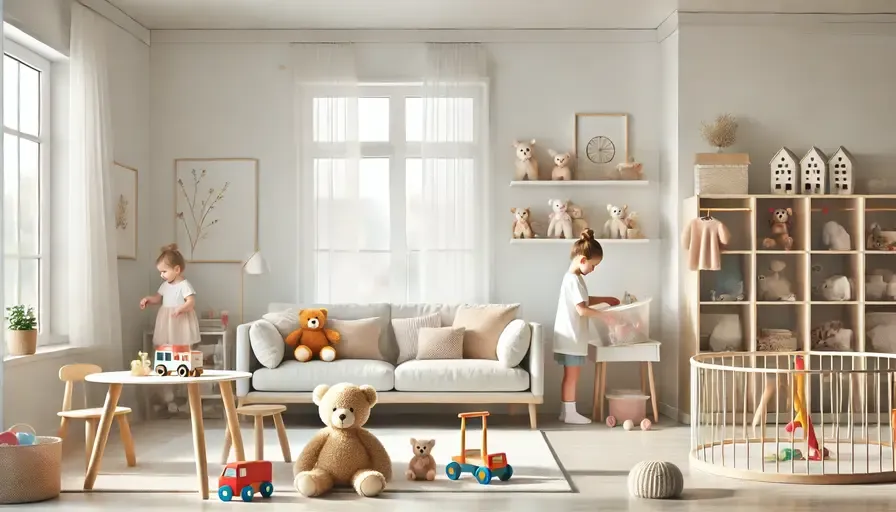
Kids put things away when it is easy to do. Low shelves, open bins and hooks at their height work far better than lids, high cupboards and deep toy chests where everything ends up in one heap. Give each type of thing its own home: one bin for LEGO, one for cars, a box for art supplies, a basket for books.
Label the bins with a word and a picture so even little ones know where things go. Clear bins help too, because kids can see what is inside. Keep a basket in the main rooms for stray items, and empty it back into bedrooms and the playroom once a day. In a Toronto condo where space is tight, storage ottomans, under-bed drawers and wall shelves do a lot of work without taking up floor space.
3. Set Up Zones for Play, Homework and Crafts
When toys can go anywhere, they end up everywhere. Pick a few zones and keep each activity in its place: a corner of the living room or the basement for play, a desk or the kitchen table for homework, and one spot for crafts with a washable mat or an old tablecloth. A rug or a low shelf marks the edge of a zone clearly, even in an open-plan space.
A few simple rules help. Snacks stay at the table, not in the play area. One activity gets put away before the next one comes out. Paint, slime and glitter are used only in the craft zone. That keeps sticky messes on surfaces that are easy to wipe and away from the sofa and the carpet.
4. Turn Tidying Into a Game
Kids will do a lot for a challenge. Set a timer for five or ten minutes and see how much the family can put away before it rings. Play a song and finish before it ends. Try a toy race, where each child picks up as many items as they can, or call out colours: everything red goes away first, then blue.
Small rewards help for younger kids, like a sticker on the chore chart or choosing the bedtime story. Keep the goals small and specific. "Put all the cars in the car bin" works better than "clean your room", which is too big for most children to know where to start.
5. Declutter Every Season
The fewer things you own, the less there is to tidy. Kids outgrow clothes, toys and books fast, and the old ones pile up in closets and under beds. Once a season, sort through them together. Let your kids decide some of what stays, which makes them more willing to let the rest go.
Keep a donation bag or bin in a closet all year, and drop outgrown items in as you find them. When it is full, drop it off at a donation centre or pass things to friends with younger kids. Rotating toys helps too: keep some in storage and swap them every few weeks so old toys feel new.
Cleaning Products and Kids
Store all cleaning products up high or behind a childproof latch, including dishwasher pods, which look like candy to small children. When kids help, give them a damp microfiber cloth or a spray bottle of water with a drop of dish soap rather than a disinfectant. For sticky tables and high chairs, warm soapy water does the job. Use stronger disinfectants for the toilet and garbage areas, and let them dry before little ones touch those surfaces.
When You Need Help With the Bigger Jobs
How can I keep the home clean without spending hours a day? Keep the daily list short, about fifteen minutes total, and save bigger jobs for one set time each week.
How often should I declutter toys? At least once a season, and before birthdays and holidays when new toys arrive.
How do I keep kids motivated? Use games, music and small rewards, praise the effort, and keep the jobs small enough to finish.
Is it worth hiring a cleaner with kids at home? Many families find it helps. They keep up the daily tidying themselves and book periodic deep cleaning or regular cleaning for the bathrooms, kitchen and floors. With busy school and work schedules, that split means the weekends are not spent scrubbing.
Your home will never stay perfect with kids in it, and that is fine. Aim for a home that can be reset in fifteen minutes, with clear places for everything and a family that knows how to help. That is a realistic goal, and it gets easier as the kids get older.