
10 Cleaning Jobs You Should Leave to the Professionals
Most cleaning around the house is easy to do yourself. A few jobs are different. They need equipment you do not own, they carry a real risk of damaging something expensive, or they are simply unsafe without training. Some of these jobs belong with a cleaning company. Others belong with a specialist trade, and it helps to know which is which before you book anyone. Here are ten jobs where calling in help is usually the better choice, based on what we see in Toronto homes and condos.
1. Carpet and Upholstery Stains
Most home stain removal goes wrong in the same way. Too much water and too much scrubbing push the stain into the backing or padding, and it comes back to the surface a few days later as a ring. Some sofa fabrics are marked "S" (solvent only) or "X" (vacuum only), and water on those leaves a permanent mark.
Check the care tag before you touch any stain. For washable fabrics, blot rather than scrub, and use as little liquid as possible. For large or old stains on wall-to-wall carpet, a carpet care company with hot water extraction equipment is the right call.
2. Grout and Tile That Has Turned Grey
Mopping cleans the tile surface, then leaves dirty water sitting in the grout lines. Over a few years, grout turns grey or black, and in bathrooms mildew settles into it. Getting it back takes a cleaner left to sit for several minutes, a stiff grout brush, and patience, line by line.
This is a typical job in a professional deep cleaning visit. Once it is clean, sealing the grout makes later cleaning much easier.
3. Windows Above the Ground Floor
Interior glass is fine to do yourself. Exterior glass on the second floor of a house, or anything outside a condo balcony, is a different story. Leaning out of windows or using a ladder on uneven ground is how people get hurt. In most Toronto condo buildings, exterior glass is cleaned by the building's own rope-access contractor. You only need to look after the inside glass, the balcony side, and the tracks.
4. Post-Renovation Dust
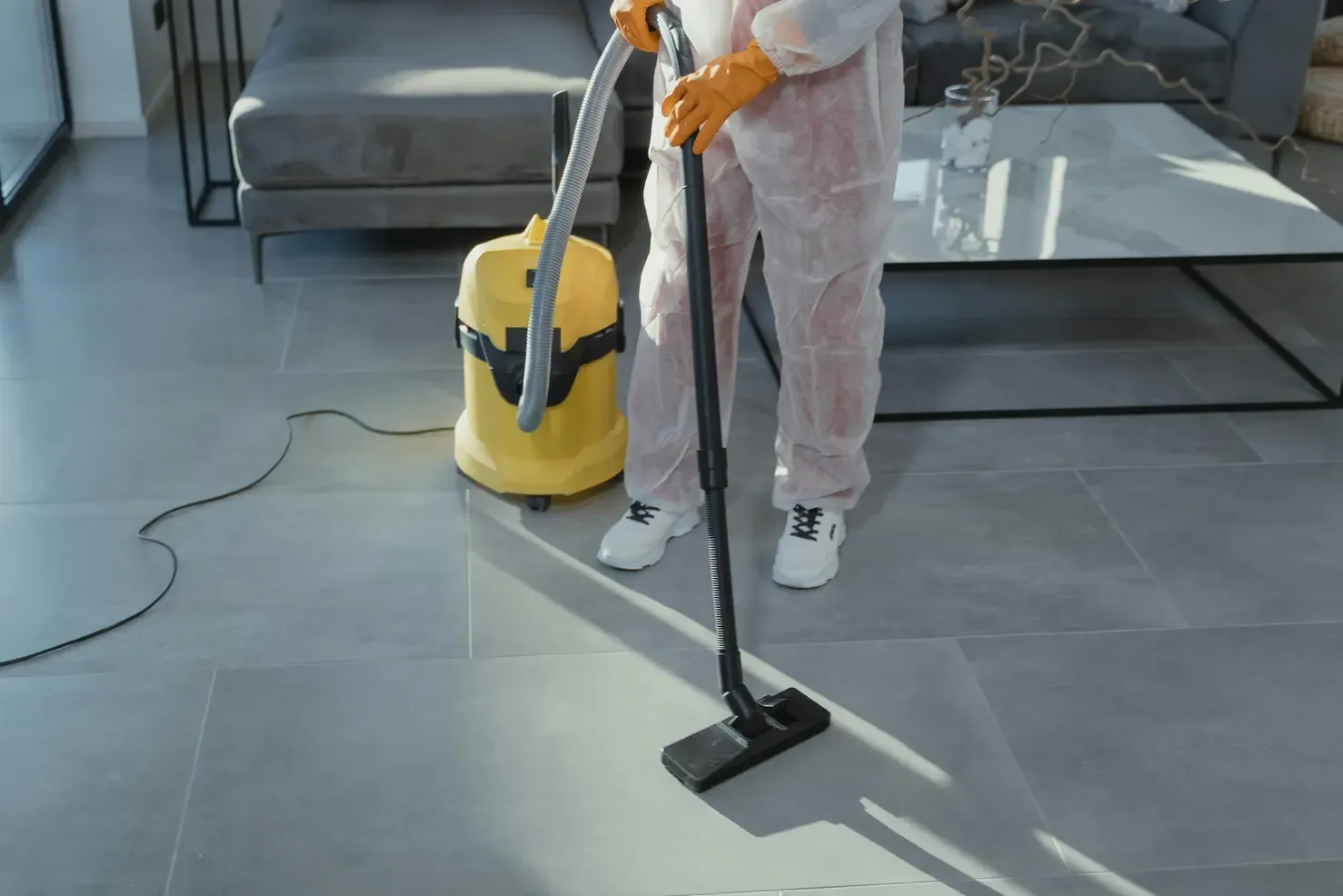
Drywall and concrete dust are much finer than household dust. A regular vacuum without a good filter blows a lot of it back into the air, and it settles again on every surface, inside cupboards, and in the HVAC system. Proper cleanup means a vacuum with a HEPA filter, top-to-bottom wiping with damp microfiber cloths, and usually more than one pass.
5. Smells That Keep Coming Back
Air fresheners cover a smell for an hour. If a smell returns, something is still producing it: pet urine in carpet padding, grease in the range hood filters, a drain trap, or a damp basement. The fix is to find and remove the source, using enzyme cleaners for organic stains and degreasing for kitchen smells. Odour from smoke damage after a fire is a job for a restoration company.
6. Air Ducts
Duct cleaning needs truck-mounted or portable vacuum systems, and in Ontario it is done by dedicated HVAC and duct cleaning companies, not house cleaners. What you can do yourself is change the furnace filter on schedule, vacuum the vent covers, and keep the area around returns clear. A cleaner can wipe and vacuum vent covers as part of a regular or deep clean.
7. Mould, Pest Droppings and Water Damage
A small patch of mildew on caulking or grout is normal bathroom cleaning. Mould across a large area of drywall, in a basement after a leak, or anything that keeps returning is not. Disturbing it releases spores. The same goes for mouse droppings, which should never be swept or vacuumed dry. Large mould problems and water damage need a remediation company. Pest problems need a licensed exterminator first, with cleaning afterwards.
8. Hardwood Floor Refinishing
Routine hardwood cleaning is simple: vacuum or dry-mop, then a barely damp mop with a cleaner made for wood. Steam mops and wet mopping can swell boards and cloud the finish. Sanding and refinishing a floor is flooring contractor work. A cleaner keeps the finish in good condition between refinishes, which helps put that cost off for longer.
9. Behind and Inside Appliances
Pulling out a fridge or stove can scratch floors, kink a water line, or strain your back. Inside an oven, baked-on grease needs a cleaner left to work for a while, and the self-clean cycle can produce heavy smoke in a condo with weak ventilation. Inside fridges, ovens and microwaves are common add-ons to a deep clean. Moving a heavy appliance is best done carefully by two people, with floor protection.
10. Move-Out and Move-In Cleaning
Move-out cleaning has a clear standard: the landlord or the buyer will check inside cabinets, inside the oven and fridge, baseboards, and bathroom fixtures. Doing it yourself on the same day you are carrying boxes usually means something gets skipped. Booking a cleaner for an empty unit also makes the job faster, since there is nothing to move around.
How to Decide
A simple rule: if the job needs a licence, specialist equipment, or puts you on a ladder or near mould, call a specialist trade. If it needs time, the right products, and a careful order of work, a cleaning service is the right fit. If the job is in the second group, PureMaids handles it for homes and condos in Toronto and across the GTA.
Frequently Asked Questions
1. Can I clean my carpets and upholstery myself?
For small, fresh spills on washable fabric, yes. Blot, use little liquid, and test on a hidden spot first. For old stains, large areas, or fabrics labelled "S" or "X", use a carpet and upholstery specialist.
2. How often should grout and tile get a deep clean?
In bathrooms and kitchens, once or twice a year is a good rhythm, with a quick weekly wipe in between. Sealing the grout after a deep clean helps it stay clean longer.
3. Does a house cleaner clean air ducts?
No. Duct cleaning is done by HVAC and duct cleaning companies with special equipment. A house cleaner can wipe and vacuum vent covers and returns.
4. Is post-renovation cleaning worth booking separately?
Usually yes. Construction dust needs HEPA vacuuming and several rounds of wiping. A regular clean is not planned for that amount of fine dust.
5. When is mould a job for a specialist?
When it covers a large area, sits in drywall or a basement after a leak, or keeps coming back after cleaning. Small surface mildew on caulking and grout is normal bathroom cleaning.