15 Benefits of a Clean Workspace for Productivity
A clean workspace helps your productivity in ways that are easy to miss until the desk gets out of hand. You lose a few minutes hunting for a charger, you get distracted by a stack of mail, you catch the cold that went around the office. None of it feels big on its own day, but it adds up over a week. This post covers fifteen practical benefits of keeping your desk clean, grouped by what they actually change, plus a five-minute end-of-day routine and a few habits for a home office in Toronto or Mississauga.
How a Clean Workspace Helps Focus and Stress
The first group of benefits is about what happens in your head when you sit down at your desk. Most people notice these within a day or two of clearing up.
1. Less stress at the start of the day
Sitting down to a desk covered in last week's papers is a small reminder of everything you have not finished. Some people work fine with it. Many find that the pile sits in the corner of their vision and nags at them all morning. A cleared desk takes that low-level pressure away and lets you start on the first task instead of the mess.
2. Fewer distractions
Everything on your desk competes for attention: sticky notes, an open notebook, a receipt you meant to file, three pens. When you are trying to get through a long report or a tight deadline, each of those is a small pull away from the screen. Keep only what you need for today's work within reach and put the rest in a drawer.
3. More room to think
Brainstorming and problem-solving need space, both physical and mental. A clear surface gives you room to spread out a sketch, a printout or a whiteboard pad. It also makes it easier to step back from a problem and look at it from another angle, because you are not constantly tidying around yourself.
4. A better mood at work
Walking into a tidy room in the morning sets a different tone from walking into chaos. It is a small thing, but it affects how willing you are to get started. People who keep a clean desk often say they feel more in control of their day, and that tends to show up as better morale over a long week.
5. Less mental clutter
Physical clutter and mental clutter feed each other. When every object on the desk represents an unfinished decision, your brain keeps a running list of them. Clearing the desk forces you to make those small decisions: file it, toss it, or put it on tomorrow's list. Once they are made, the list in your head gets shorter and decisions on real work come easier.
Saving Time and Building Better Habits
The second group is practical. These benefits show up as minutes saved and fewer things forgotten.
6. Less time spent searching
Think about how often you lift papers looking for a pen, a USB stick or the one document a client asked about. A desk where everything has a set place means you find things in seconds. Over a working week, those saved minutes are real, especially if you juggle a commute across the GTA and have limited hours at the desk.
7. Easier planning and time management
When you know where your notes, files and tools are, it is easier to plan the day around what matters. You can see your priorities instead of digging for them. A single notepad with the day's main tasks, sitting on an otherwise clear desk, does more than a long list buried under other paper.
A simple rule helps here. Anything you use every day stays on the desk. Anything you use every week goes in the top drawer. Anything you use less often goes on a shelf or in a labelled box. Once a month, look through the drawer and move out whatever has drifted in and never been touched. Old cables, dried-out pens and free notepads from conferences are the usual culprits.
8. More done in less time
Put the points above together and you get the main result: more work finished on schedule. Fewer interruptions, less searching and clearer priorities make it easier to hit deadlines without staying late.
9. Organizing habits that spread
Keeping one desk in order is good practice. People who build a daily reset at work often start doing the same thing with the kitchen counter or the hall table at home. The habit is the same: give things a place and put them back.
10. Clearer communication
When your notes are in one place and your head is less crowded, emails and presentations tend to come out clearer. You can find the figure you need during a call instead of saying you will send it later.
Health, Germs and Indoor Air
This is where cleaning matters most, and where a quick tidy is not enough on its own.
11. Fewer germs on the things you touch
Keyboards, mice, phones and desk surfaces are touched all day and rarely cleaned. In a shared office, the bigger risk is usually the shared touchpoints: the kitchenette counter, the fridge handle, the coffee machine buttons, meeting-room tables and door handles. Wiping your own desk helps. Making sure the shared areas get disinfected regularly helps more, especially through cold and flu season.
For electronics, spray the cleaner onto a cloth, never directly onto the keyboard or screen. Use a disinfecting wipe that is wrung out well, or a cloth lightly dampened with isopropyl alcohol, and switch the device off first. Phone screens and headsets get the same treatment. Skip anything with bleach on laptop screens, because it can strip the anti-glare coating.
12. Better indoor air
Dust settles on paper piles, behind monitors and around tangled cables, and it gets stirred up every time you move something. Fewer piles mean fewer places for dust to collect. Dusting with a damp microfibre cloth, rather than a dry duster, picks dust up instead of moving it into the air. In Toronto winters, when windows stay shut for months, this makes a noticeable difference for anyone with allergies.
How a Clean Desk Affects the People Around You
13. A more professional image
Clients and colleagues notice your desk, even if they never mention it. A tidy workspace tells people you are organized and take the job seriously. That matters on video calls too, where your background is part of the first impression.
14. A better example for others
Habits are contagious in a shared space. When one person clears their desk every evening, others often start doing the same, and the whole office or household gets easier to keep in order. A shared rule, such as clearing meeting-room tables after every meeting and taking your own dishes back to the kitchen, works better than one person quietly tidying up after everyone.
15. Higher job satisfaction
The last benefit is the sum of the others. Less stress, fewer lost items, fewer sick days and a room that looks cared for all make work more pleasant. People who like their workspace tend to stay engaged with their work for longer.
The Five-Minute End-of-Day Desk Reset
Fifteen benefits, one habit. This is the short checklist we suggest to office clients. It takes about five minutes at the end of the day:
- Clear the desktop: papers go into one tray, mugs go back to the kitchen.
- Wipe the desk, keyboard, mouse and phone with a disinfecting wipe. Let the surface stay wet for the time listed on the label.
- Straighten cables and push the chair in. Visual order matters more than it sounds.
- Write tomorrow's top three tasks on a single note and leave it in the middle of the desk.
- Empty your personal bin if it holds food scraps or coffee cups, so nothing sits overnight.
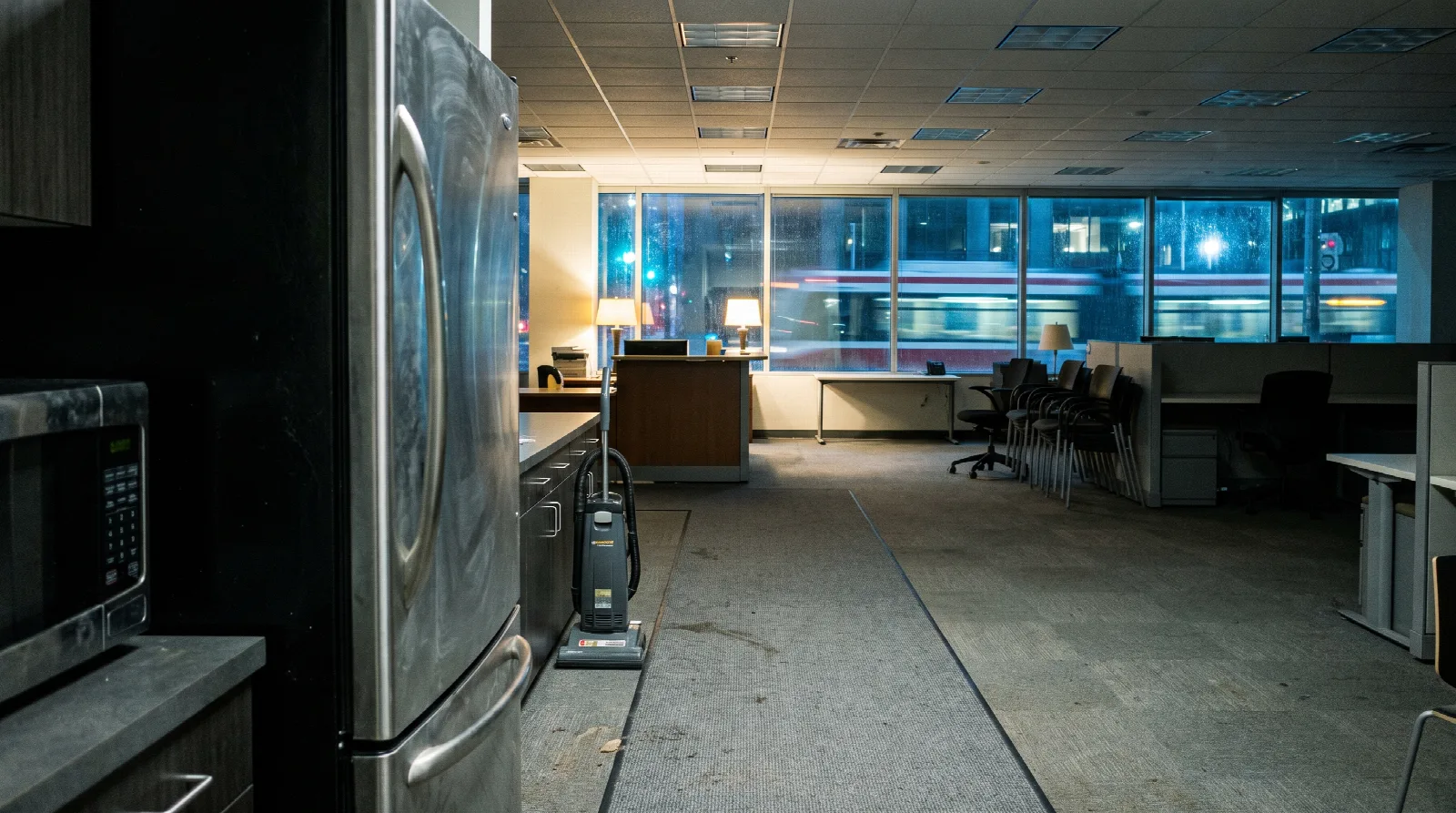
The personal desk is only part of the picture. Kitchenettes, washrooms, meeting rooms and carpets are where dust and germs build up in most offices, and they need a regular cleaning schedule of their own.
If Your Workspace Is a Home Office
Remote work blurs the line between the desk and the rest of the house. A home office also collects clutter faster than a company office, because nobody else shares it and nobody else notices. Three habits keep it under control.
Keep work in one zone
Use one dedicated spot for work, even if it is a corner of the bedroom or the end of the dining table. When work stays in its zone, it is easier to close the laptop at the end of the day, and the rest of the home stays tidier.
Give paper and cables a place
Shelves, a drawer organizer and labelled folders or boxes stop papers from spreading across the desk. A simple cable tray or a few clips under the desk removes the tangle behind the monitor that collects dust.
Add a weekly deeper wipe
Once a week, dust the monitor and shelves, vacuum under the desk and chair, and wipe the keyboard, mouse and headset. You touch them for hours every day, and dust and skin oils build up on them quickly. Turn the keyboard upside down over a bin and tap it to get the crumbs out first.
Look at the light as well. A desk facing a window is pleasant, but it also shows every streak and fingerprint on the monitor, and Toronto winter sun sits low enough to glare straight off a dusty screen. A clean screen and a clear sill make a sunny room easier to work in. If the office is in a basement, run a dehumidifier in the humid summer months so paper, books and the chair fabric do not pick up a musty smell.
When Daily Tidying Is Not Enough
Your desk habits handle the daily reset. Professional cleaning covers the rest: carpets, kitchenettes, washrooms and the shared surfaces where dust and germs actually collect. PureMaids provides commercial office cleaning across Toronto and the GTA, scheduled in the evening or early morning so it does not interrupt your team. If you work from home, a regular home cleaning keeps the home office in the same shape. You can Request a quote if you want to talk through a schedule.
Common Questions About Keeping a Clean Workspace
How often should I clean my desk?
Do a quick tidy every day and a deeper clean once a week. The daily reset stops piles forming. The weekly clean deals with dust and the keyboard, mouse and phone.
Can a clean workspace really help creativity?
For most people, yes. A clear surface gives you room to spread out ideas, and fewer distractions make it easier to stay with a problem long enough to solve it.
What are quick ways to keep a desk organized?
Use a desk organizer or one tray for incoming paper, move anything you have not used this week off the desk, and do the five-minute reset before you leave.
Does a clean workspace affect mental health?
A tidy space will not fix stress on its own, but many people find it lowers day-to-day tension and makes it easier to concentrate and make decisions.
Should I hire a professional cleaner for my office?
If your office has shared kitchens, washrooms or carpeted areas, a regular professional clean is usually worth it. Staff can keep their own desks tidy, while the cleaning crew handles the deep work in shared spaces on a set schedule.