Your Entryway Does the Dirtiest Job in the House — Here's How to Protect It
Your entryway does the dirtiest job in the house
Think about what your front hall puts up with. Every person, every pet, every grocery run and soccer practice and rainy commute lands on that one small patch of floor. It's the first thing dirt touches and the last thing anyone gets around to cleaning. No wonder it wears out faster than any other room in the place. It's a chokepoint, really. The whole household funnels through a few square feet, so everything that would otherwise spread thin across the house gets concentrated right there instead.
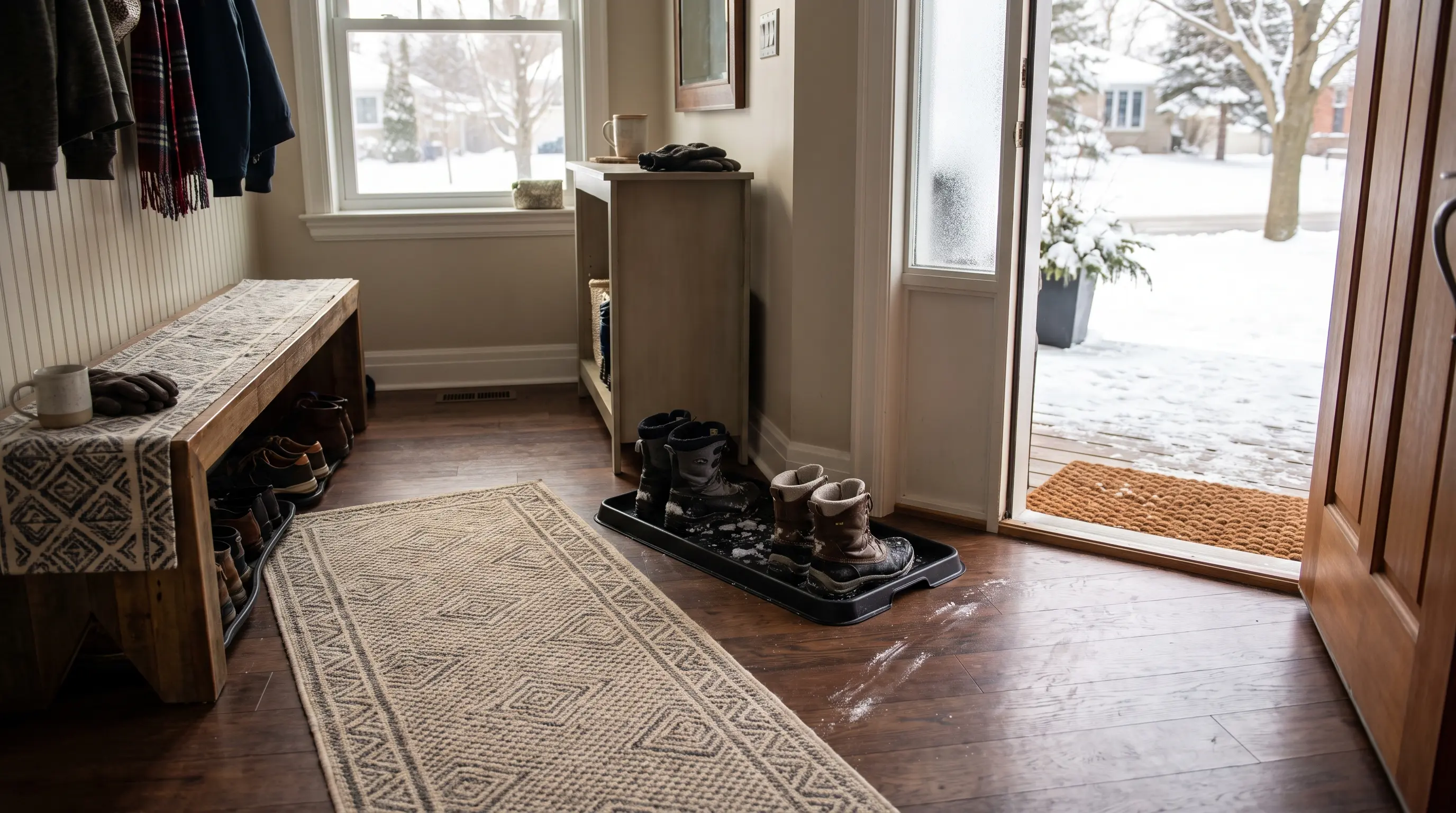
In the GTA that goes double once the weather turns. Winter drags in road salt and slush. Spring brings mud. Summer's all dust and grass clippings, and fall buries the mat under wet leaves. The entryway never really gets a break.
What's really coming through the door
Most of the grime by your door isn't random. It's a handful of specific culprits, tracked in over and over:
- Road salt, which doesn't just sit there. It pulls in moisture and eats at hardwood and grout when it's left
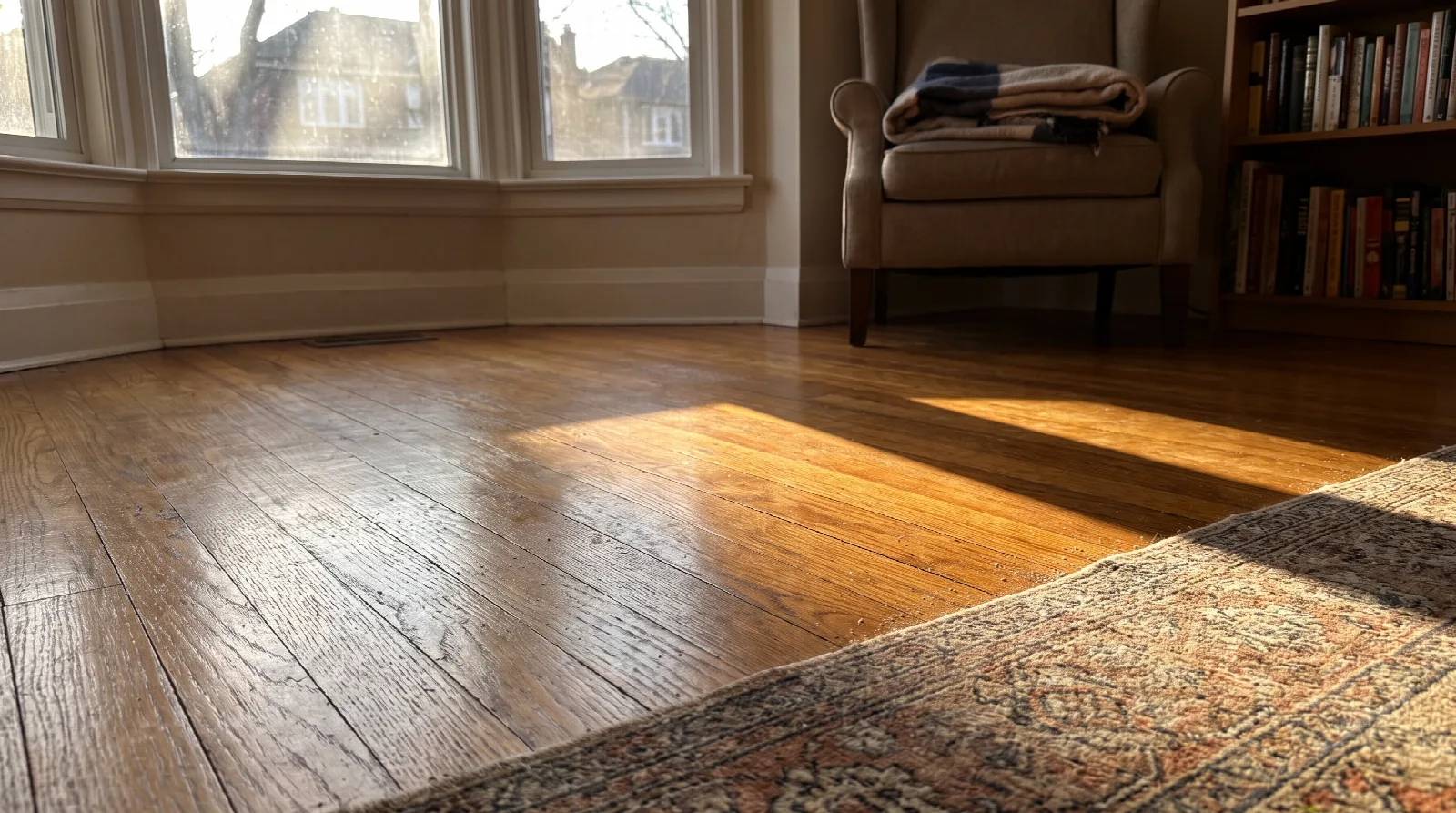
- Fine grit and dust, the sandpaper that slowly scratches a floor finish dull
- Water and slush, soaking into mats and baseboards where mould likes to start
- Pet paws, mud, and whatever the dog found in the backyard
- Whatever rode in on the wheels of a stroller or the bottom of a hockey bag
Here's the part people underestimate. Salt and water together do the most damage, because the wet keeps the salt working and the salt keeps pulling in more wet. Leave it a full season and you'll see the white haze it leaves behind on hardwood. Some of that doesn't buff out.
Your mudroom cleaning checklist
You don't need fancy gear to stay ahead of it. You need a routine and a couple of decent barriers. Run through this every week or two, more often in winter:
- Shake out and wash both mats, the outdoor scraper and the indoor absorbent one. A loaded mat just redeposits dirt.
- Sweep or vacuum, then damp mop to lift the salt film. Plain water works, or a splash of vinegar for stubborn residue.
- Wipe the baseboards and lower wall. Splashes land higher than you'd think.
- Empty and clean the boot tray. Standing salt water is what warps the floor sitting under it.
- Sort the shoe pile. Wet boots out to dry, off-season pairs stored away, so the zone isn't permanently buried.
- Check the corners and the door track for grit. That's where it hides and grinds.
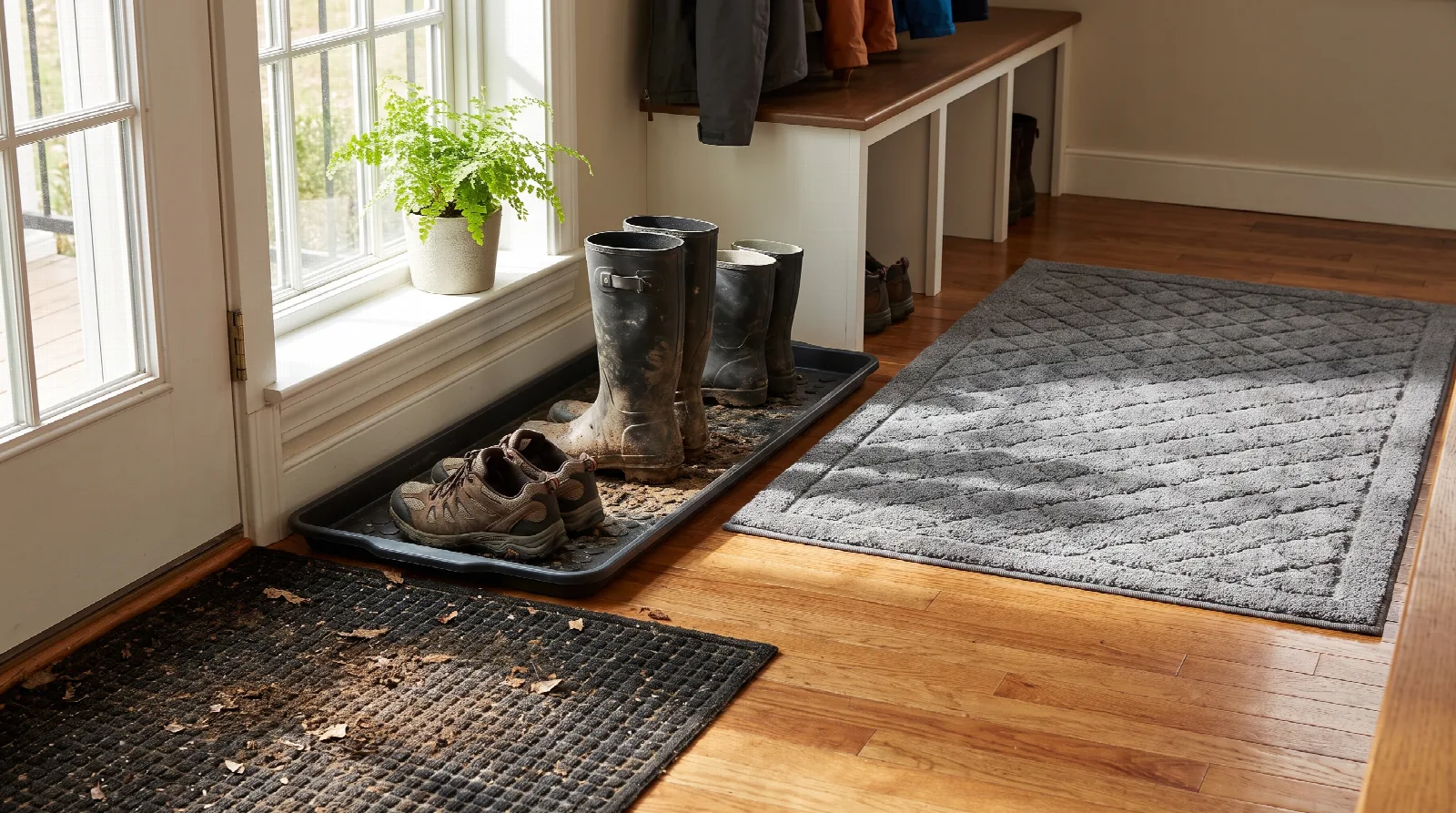
Two habits make the rest easier. Put a real scraper mat outside and an absorbent one inside, and actually leave shoes there instead of walking through in them. That one change cuts the dirt reaching the rest of your house by a wide margin.
A few cheap additions protect the floor itself, which is the expensive part to fix:
- A waterproof boot tray with a raised lip, so melting slush can't run off onto the hardwood
- A washable runner down the busiest strip. Far easier to toss in the wash than to refinish a floor
- Felt or a small mat under the bench, if you've got one, since grit collects underneath where nobody looks
- Re-sealing grout and re-coating hardwood on schedule, so salt and water have less to bite into
When it's worth handing off
A weekly tidy keeps the surface in line. But the buildup that works into grout lines, under the trim, and deep into a high-traffic runner is a different job, and it's the easy one to put off for months. By the time you notice, it's set in.
That's when professional cleaning services pay for themselves. This kind of high-traffic area cleaning is exactly what a good crew is built for, with the equipment to lift ground-in salt and grit that a household mop just smears around. PureMaids handles entryways and mudrooms across Toronto and the GTA, and one proper deep clean a couple of times a year keeps the wear from turning permanent.
If your front hall looks tired no matter how often you sweep, that's usually the floor telling you the grime has gone deeper than the surface. Worth resetting before it costs you the finish.